Have you noticed that one or both of your upper eyelids appear lower than they used to? Or perhaps you have extra skin around your eyes that makes your eyelids feel heavy?
While these concerns can look similar, ptosis and dermatochalasis are two different eyelid conditions. Understanding the difference can help you know when it may be time for an evaluation with an ophthalmologist.
What Is Ptosis?
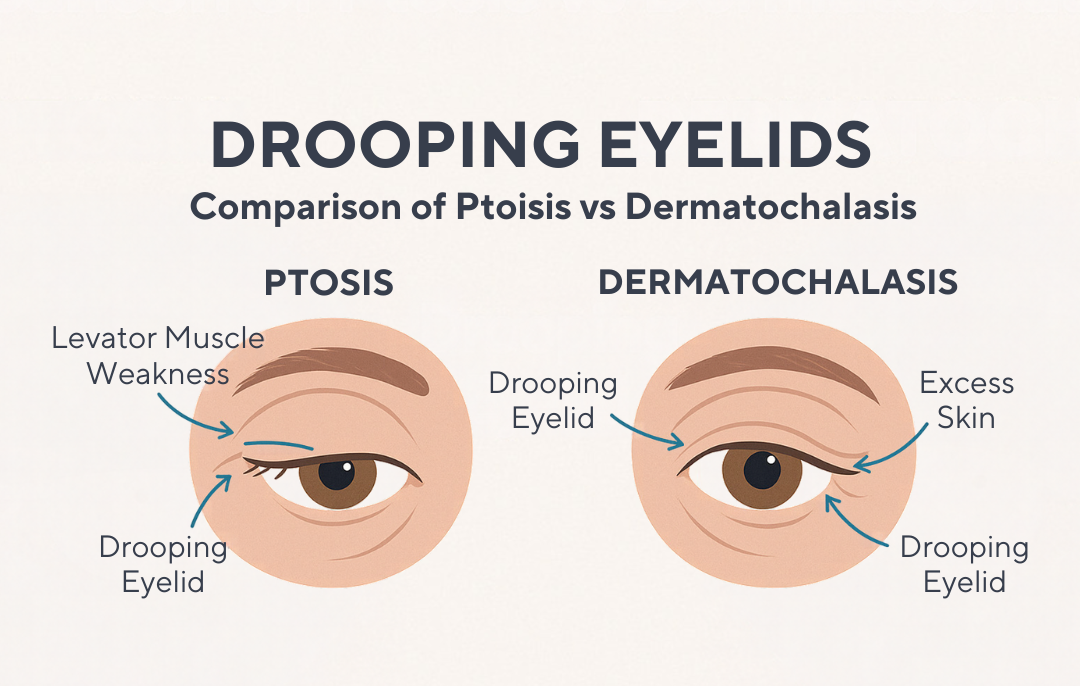
Ptosis is drooping of the upper eyelid that occurs when the muscles or structures responsible for lifting the eyelid become weakened or stretched.
Ptosis can affect one or both eyes and may develop with age, although it can also occur for other reasons. In some cases, the drooping eyelid can interfere with the upper portion of your vision.
Common signs of ptosis may include:
- One or both upper eyelids appearing lower than normal
- Difficulty keeping the eyes fully open
- Raising the eyebrows or tilting the head to see more clearly
- Feeling like the eyelids are heavy or tired
- Reduced vision in the upper part of the visual field
We can evaluate the position and function of the eyelid to determine whether ptosis may be contributing to these symptoms.
What Is Dermatochalasis?
Dermatochalasis refers to excess or lax skin of the upper or lower eyelids. It commonly develops as the skin loses elasticity with age.
Unlike ptosis, which involves the position and lifting mechanism of the eyelid, dermatochalasis primarily involves excess eyelid skin.
Common signs may include:
- Excess skin folding over the upper eyelid
- A heavy or hooded appearance around the eyes
- Difficulty applying makeup because of excess skin
- A feeling of heaviness around the eyelids
- In some cases, excess skin that contributes to reduced peripheral vision
How Are They Different?
Although they can occur together, the underlying causes are different.
Ptosis: The upper eyelid itself is positioned lower because of weakness or dysfunction involving the eyelid's lifting mechanism.
Dermatochalasis: Excess or loose eyelid skin creates folds or a hooded appearance around the eye
Because the two conditions can look similar, an evaluation can help determine what is contributing to your eyelid concerns.
Can Ptosis and Dermatochalasis Be Treated?
Treatment depends on the underlying cause, the severity of the condition, and whether it is affecting vision or daily activities.
For some patients, treatment may involve an eyelid procedure to address excess skin, while others may require treatment directed at the eyelid's lifting mechanism. When both ptosis and dermatochalasis are present, treatment may address both concerns.
When Should You Have Your Eyelids Evaluated?
If you notice a new or worsening droop in your eyelid, excess skin affecting your vision, or persistent eyelid heaviness, schedule a comprehensive evaluation.
Dr. Gil Epstein and Dr. Aliza Epstein provide evaluation and treatment for conditions affecting the eyelids and surrounding structures of the eye. Our goal is to understand the cause of your symptoms and develop a personalized treatment plan based on your individual needs.