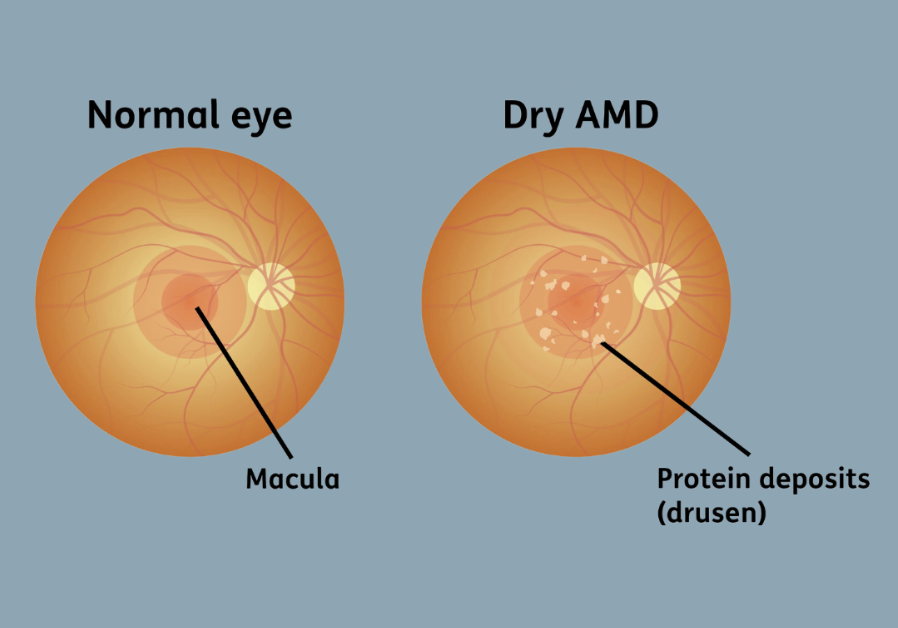
Dry Age- Related Macular Degeneration (AMD) is the most common form of macular degeneration and occurs when the macula, the part of the retina responsible for sharp central vision, gradually deteriorates over time.
As the condition progresses, small yellow deposits called drusen can accumulate beneath the retina, leading to changes in vision.
In its early stages, Dry AMD may not cause noticeable symptoms.
As the disease advances, patients may experience blurred or hazy central vision, difficulty reading or recognizing faces, reduced color perception, increased sensitivity to low light, or dark spots in their central vision.
Risk factors for Dry AMD include aging, smoking, family history, high blood pressure, obesity, and certain genetic factors.
Our Retina Specialists use advanced diagnostic technology, including comprehensive eye exams, retinal imaging, Optical Coherence Tomography (OCT), and Optos Ultra-Widefield Retinal Imaging to evaluate retinal health and monitor disease progression.
While Dry AMD cannot be reversed, early diagnosis and ongoing management may help slow progression and preserve vision.
Treatment recommendations may include AREDS2 nutritional supplements, smoking cessation, a healthy diet rich in leafy greens, UV protection, and routine retinal monitoring.
Fort Lauderdale Eye Institute also participates in clinical research focused on advancing treatments for retinal diseases, providing eligible patients with access to emerging therapies and innovative care options.