
Diabetic Macular Edema (DME) is swelling in the macula, the central part of the retina, causing vision impairment. DME occurs in people living with diabetes. Fluid buildup occurs when high blood sugar levels damage the blood vessels in your eyes, leading them to weaken and potentially leak. This condition may also cause the growth of new and inappropriate blood vessels. Individuals who have diabetes are at risk of developing this condition. Symptoms to look out for are blurred vision, double vision, and a sudden increase in floaters.
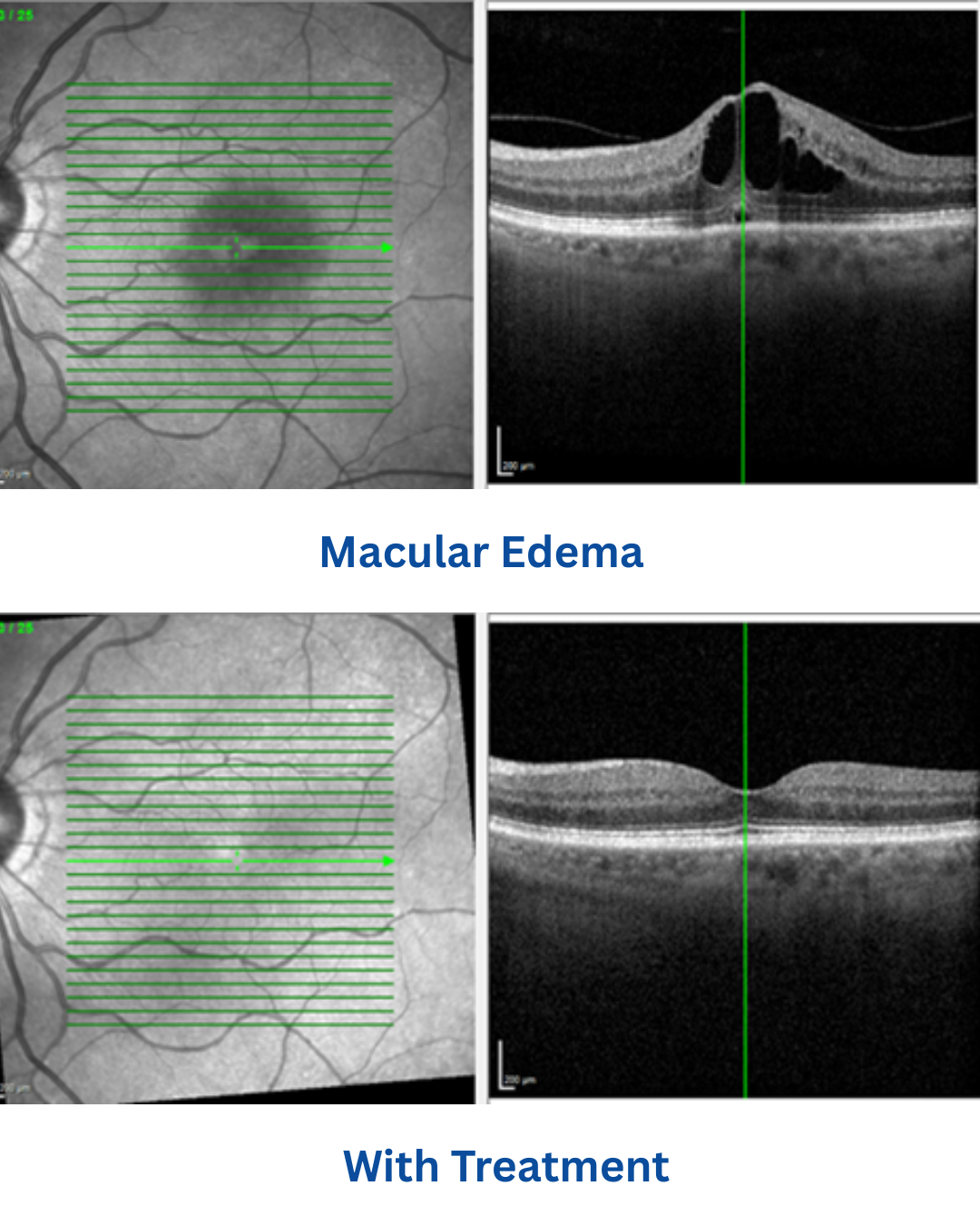
There are various treatment options for diabetic macular edema, which will depend on the specifics of each individual case.
• Intravitreal Injections help by blocking a protein that causes abnormal blood vessel growth and leakage in the retina. These injections are highly effective at improving vision and reducing retinal swelling.
• Laser Therapy treats diabetic macular edema by sealing leaking blood vessels and reducing fluid, but it is second in line if anti-VEGF injections are not effective.
• Steroids are used when DME is resistant to anti-VEGF treatments and causes inflammation.
• Vitrectomy is performed when the vitreous gel pulls on the macula or a membrane forms on the retina. It increases oxygen and nutrient supply to the macula, removes growth factors from the retinal surface, and reduces swelling.
Regular eye exams and effective diabetes management are essential for preventing and treating diabetic macular edema (DME). Working closely with a retina surgeon enables early detection and timely treatment, helping preserve your vision.